


Better technology
While that has been happening in wholesale markets, suppliers of battery energy storage systems have been rapidly scaling up and innovating. Recent breakthroughs in the design of battery cells have increased BESS energy density, meaning that the most recently launched systems can store more energy than previous versions for the same space. That has been achieved by the optimization of battery cell interiors with more area dedicated to electrodes, increasing capacity while keeping dimensions and voltage unchanged.
Rising BESS capacity and falling raw material prices for batteries have led to a significant decrease in energy storage system prices. This decline is also influenced by softer competition for battery cells due to a slowdown in electric vehicle market growth. We have seen prices for fully installed systems fall by about 40% since 2022.
Quick returns
With falling prices and rising revenues, the two key elements for building a profitable business case for energy storage are moving in the right direction at the same time. The return-on-investment (ROI) figure is a key indicator, showing how long it would take for capex to be paid back under current market conditions. ROI has seen some very significant declines in recent years. Not very long ago, it could take up to 80 or 90 years to make back an investment in storage by trading in day-ahead energy markets. Today, in many cases, the figure is less than 10 years. Add to that other revenue streams, such as real-time market trading, grid-backing ancillary services, and capacity market contracts, and the business case is very strong.
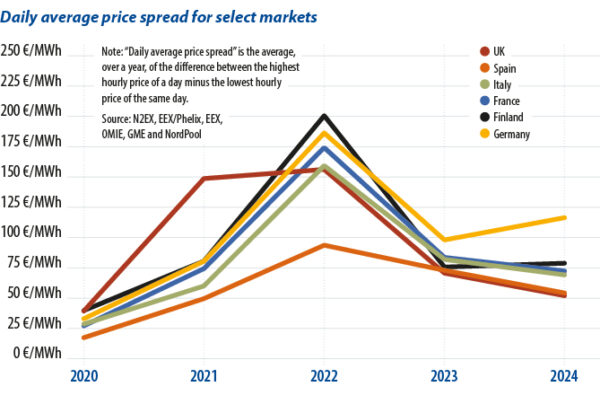
Falling prices and rising revenues are strengthening the business case for merchant energy storage going forward. But that may not translate directly to growth, due to the inherent risk in merchant markets. Greater development of contracted revenues plays a key role in driving down risk for investors and broader availability would open up access to capital to drive the industry forward. So despite the tailwinds behind the rise of energy storage, there is more to be done to unlock maximum growth for this critical industry.
Energy storage installations generate returns through two primary streams: merchant revenue and contracted revenue. Contracted revenue often requires reform, market creation, and government backing to come to fruition, with key examples including capacity markets and large-scale tenders.
On the other hand, merchant revenue – which does not need an energy offtaker – is organic and can develop as more price volatility becomes present in existing market structures. In recent months, merchant revenues have become more important to the energy storage market and have led to optimistic outlooks in some key regions.
Building a profitable business case for merchant storage, or any asset for that matter, relies on low capital expenditure (capex) costs and/or high revenue. These two things have changed recently, creating growth in energy storage installations.
