


Hey there! I'm a supplier in the solar panel and inverter game. Today, let's have a chat about what the power output of solar panels and inverters is all about.
First up, solar panels. These bad boys are like the power generators of a solar energy system. They soak up sunlight and turn it into electricity. But how do we measure their power output? Well, it's usually measured in watts (W).
The power output of solar panels can vary a whole lot. It depends on a bunch of things, like the type of solar cells they use, their size, and the amount of sunlight they get.
Let's talk about different types of solar panels. There are monocrystalline, polycrystalline, and thin - film solar panels. Monocrystalline panels are known for being super efficient. They can convert more sunlight into electricity compared to the other types. This means they usually have a higher power output per square foot. Polycrystalline panels are a bit more affordable, but they're not quite as efficient as monocrystalline ones. Thin - film panels are flexible and lightweight, but they generally have a lower power output.
Now, when you're in the market for solar panels, you'll come across different wattage ratings. For example, if you click on this 380w 400 Watt Flexible Solar Panel Installation, you'll see that these panels have a power output that can range from 380W to 400W. This is great for applications where you need a decent amount of power but also want some flexibility in terms of installation.
But it's not just about the panel itself. The amount of sunlight also plays a huge role. Solar panels are tested under standard test conditions (STC), which means they're exposed to a specific amount of sunlight, temperature, and other factors. In the real world, the sunlight levels can be different. In regions closer to the equator, solar panels can get more intense sunlight, so their power output will be closer to or even higher than the rated wattage. In areas with less sunlight, like in the northern parts of some countries during winter, the power output will be lower.
Another thing to consider is shading. Even a small amount of shading on a solar panel can significantly reduce its power output. So, when you're installing solar panels, you've got to make sure they're in an area where they can get full sunlight throughout the day.
Okay, now let's move on to inverters. An inverter is like the brain of a solar energy system. Its main job is to convert the direct current (DC) electricity produced by solar panels into alternating current (AC) electricity, which is what we use in our homes and businesses.
The power output of an inverter is also measured in watts. You need to choose an inverter with the right power output to match your solar panel system. If you have a small solar panel system with low - wattage panels, you don't need a high - power inverter. On the other hand, if you have a large solar panel array, you'll need a big - time inverter to handle all that electricity.
Let's say you're looking at 100KW On Grid Solar Inverter. This bad boy is designed for large - scale solar installations. It can handle a huge amount of electricity and is used in projects where the solar power is fed back into the grid.
There are different types of inverters too. String inverters are the most common. They're great for small to medium - sized solar panel systems. Microinverters are attached to each individual solar panel, which allows each panel to operate independently. This is really useful if you have shading issues because it won't affect the whole system as much.
Hybrid inverters are a relatively new thing. They can work with both solar panels and batteries. For example, take a look at Deye 6kw Hybrid Solar Inverter. It's designed to store excess solar energy in batteries so you can use it when the sun isn't shining. This is perfect for off - grid or backup power systems.
When you're sizing an inverter, you've got to think about the peak power output of your solar panels. You don't want to overload the inverter, but you also don't want to under - size it. If the inverter is too small, it won't be able to convert all the electricity produced by the solar panels, and you'll be wasting that free energy.

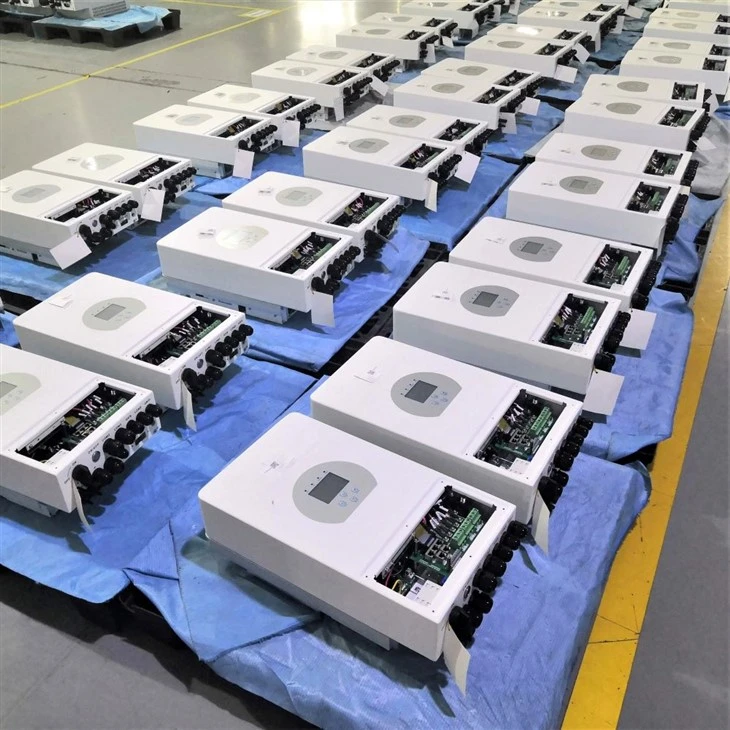
Some inverters also have efficiency ratings. A high - efficiency inverter means that it can convert more of the DC electricity into AC electricity without losing too much energy in the process. This is important because it impacts how much electricity you actually get to use.
In conclusion, understanding the power output of solar panels and inverters is crucial if you're planning to set up a solar energy system. Whether you're a homeowner looking to save on electricity bills or a business person wanting to go green, getting the right combination of solar panels and inverters can make all the difference.
If you're interested in purchasing solar panels or inverters, we'd love to have a chat. You can reach out to us to discuss your specific needs and requirements. We're here to help you find the perfect solar solution for your situation.
References
- "Solar Energy Basics", U.S. Department of Energy
- "Solar Power Systems: Design and Installation Guide", McGraw - Hill
